

 Design & product






What budget should you plan for a visual identity?
Visual identity costs in Belgium depend on research, the visual system and the applications to deliver. As an educational example, a fictional eight-day assignment at a hypothetical €700 daily rate totals €5,600 excluding VAT. This is neither a Gaspa package nor a Belgian market average. Compare scope: a standalone logo, a complete identity and a rebrand with rollout address different needs.
Three checks when comparing proposals
- 01Connect the budget to usage: logo, guidelines, applications and rollout.
- 02Specify creative directions, feedback, files and usage rights.
- 03Examine complete identities beyond a logo on a mockup.
01
Logo, visual identity and branding: what are you comparing?
A logo identifies a brand. A visual identity brings together recognisable colours, typography, compositions, images and usage rules. Branding more broadly covers positioning, personality and how a brand expresses itself. A proposal may include some of this work and exclude other parts.
Before asking for a logo price in Belgium, explain what must work on delivery. A new company may need an identity and initial applications. An established brand may mainly need clearer rules or a logo that remains legible on mobile.
At Gaspa in Brussels, this is where we start: your business, audiences and the materials to create or evolve. That brief helps us propose an art direction and deliverables suited to your situation.
| Need | Deliverables to specify | Comparison question |
|---|---|---|
| New logo or logo evolution | Versions, formats, minimum sizes and essential uses | Does the rest of the visual system already exist? |
| Complete visual identity | Logo, palette, typography, rules and initial applications | Do the elements work together in real situations? |
| Rebrand | Diagnosis, identity changes and a replacement plan | What changes, what stays and what must be rolled out? |
02
Three illustrative visual identity budgets
The following method connects a figure to assumed effort. We use a fictional €700 daily rate excluding VAT for three illustrative scopes. Days are not market averages and these are not Gaspa prices. A real proposal depends on context, stakeholders and agreed deliverables.
The examples exclude purchased fonts and images, printing, fabrication, website development, trademark protection formalities and additional requests. They explain what is being estimated, rather than establishing a contractual price.
| Fictional assignment | Assumed scope | Calculation | Total excluding VAT |
|---|---|---|---|
| Targeted logo evolution | Limited diagnosis, one direction and agreed exports | 3 days × €700 | €2,100 |
| A coherent first identity | Discovery, research, logo, palette, typography and short guide | 8 days × €700 | €5,600 |
| Rebrand with initial applications | Broader diagnosis, identity, rules and defined applications | 15 days × €700 | €10,500 |
03
How work is allocated for a complete identity
One possible allocation of the fictional eight-day, €5,600 excluding VAT example appears below. It helps place the right questions. Unclear positioning or multiple stakeholders choosing different directions changes discovery and coordination effort.
The number of proposals alone does not establish quality. Ask how directions relate to your audience and how the chosen system is tested on real applications. Agree approval stages: changing a name after approving its logo changes the work.
| Stage | Assumed effort | Amount excluding VAT |
|---|---|---|
| Brief and discovery | 1 day | €700 |
| Research and creative direction | 2 days | €1,400 |
| Logo and visual system | 3 days | €2,100 |
| Feedback and adjustments | 1 day | €700 |
| Guide and exports | 1 day | €700 |
| Total | 8 days | €5,600 |
04
Deliverables to request with a logo and brand guidelines
An identity is easier to use when its files and rules meet team needs. List priority applications before the quote: email signatures, social media, sales presentations, a website, packaging, vehicles or signage. They have different constraints.
Useful guidelines show applications and mistakes to avoid. They cover spacing, sizes, background variants and colour combinations. Test digital text against its background: W3C’s WCAG recommendations provide a contrast framework. Logos have a different exception from ordinary text.
Specify the handover
- Vector logo and exports suited to agreed uses
- Colour, monochrome and light or dark background variants
- Palette references for relevant digital and print applications
- Typography, usage and required licences
- Composition rules and layout examples
- Editable templates and explicitly included applications
- Source files and agreed handover conditions
- Rules allowing future suppliers to continue the identity
Sources consulted
05
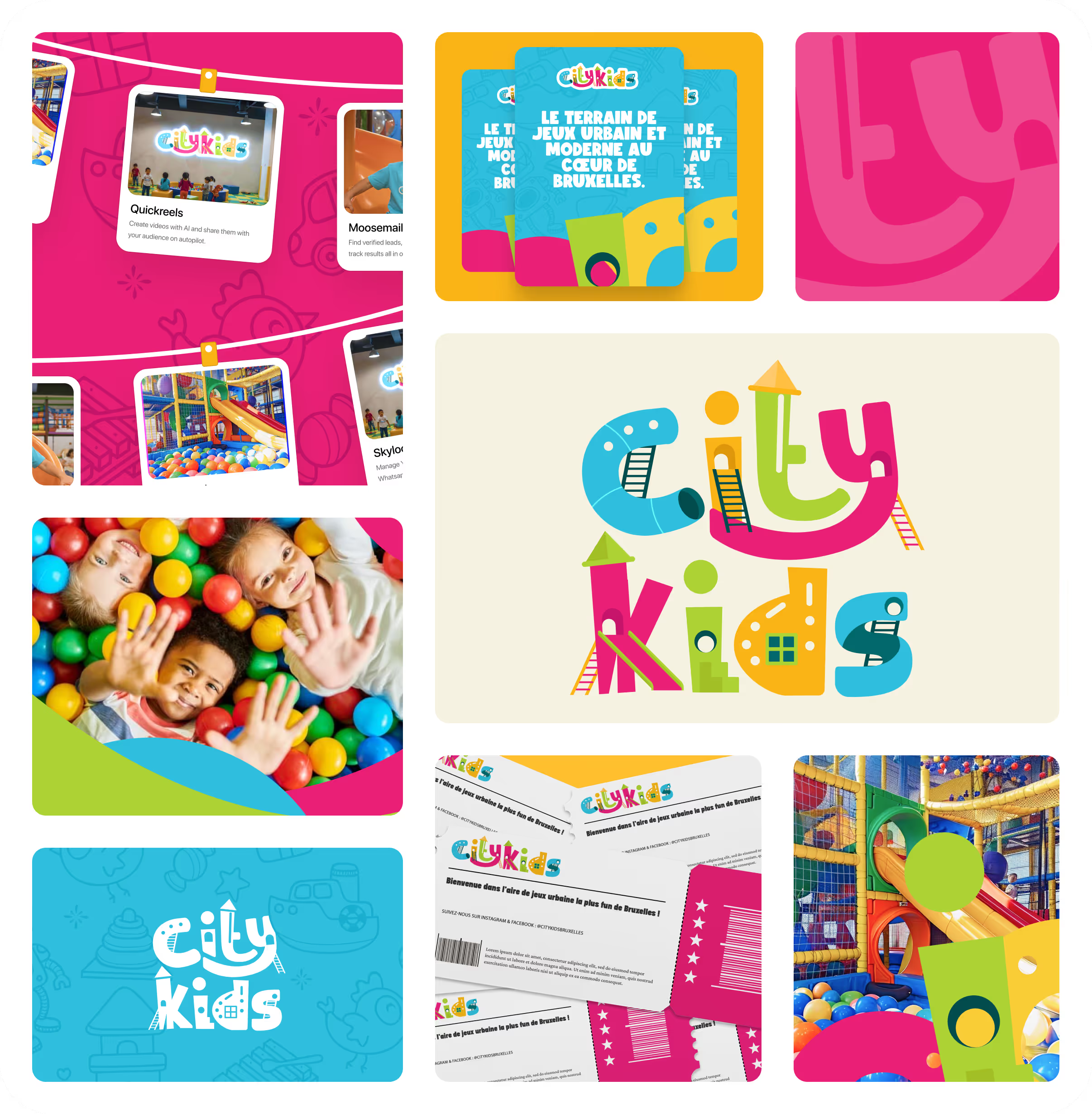
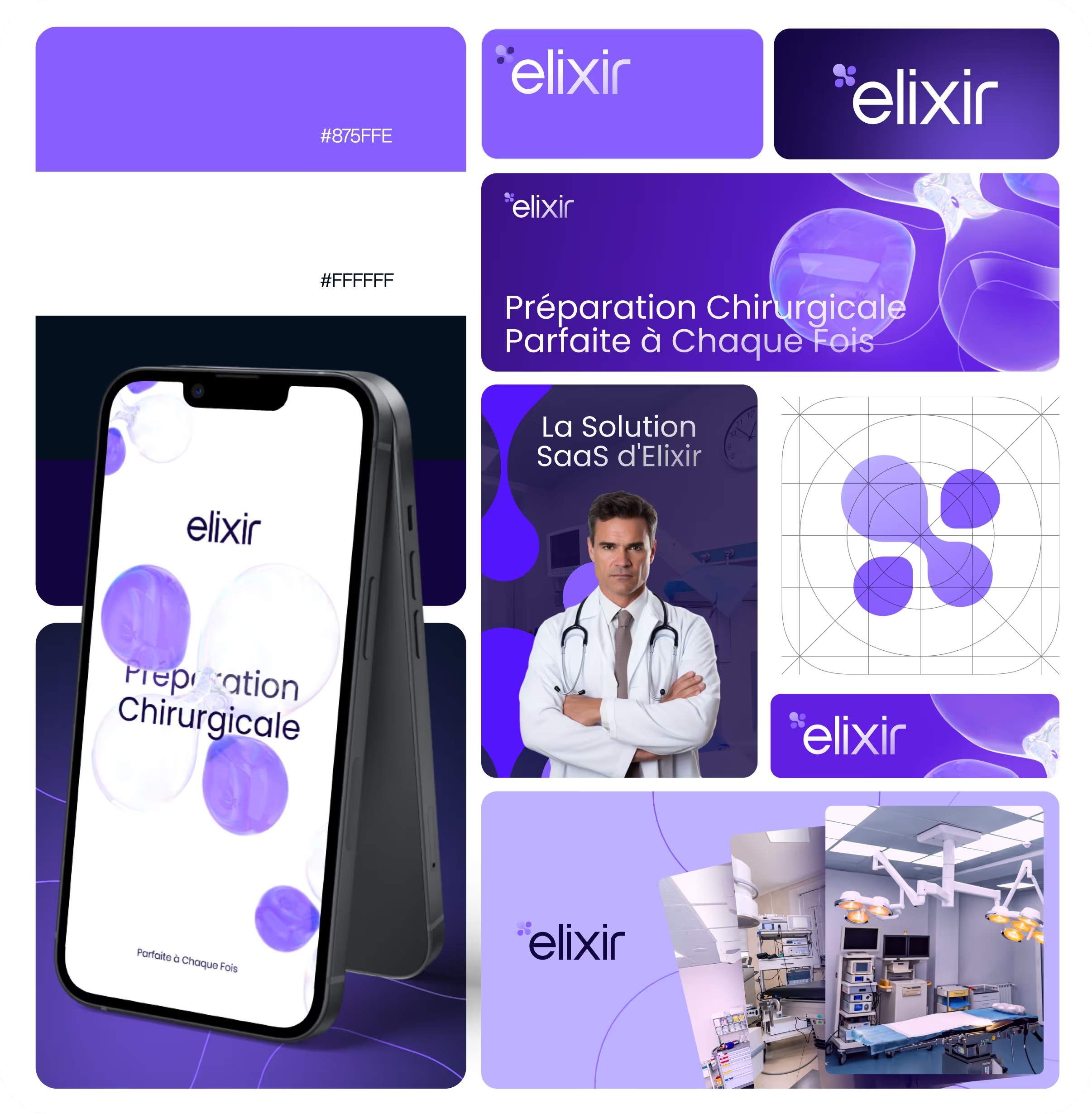
City Kids and Elixir: two visual identities by Gaspa
For City Kids, we developed a playful world combining illustrated lettering, a colourful palette and brand applications. For Elixir, the direction comes through a logo, pattern and materials in a purple visual world. Two audiences and two expressions, each with a coherent set of visual elements.
These projects show what to examine in our work: the relationship between the logo, colours, typography and applications. Look at how each brand stays recognisable across materials. Their budgets are not published here; the earlier calculations remain separate educational examples.
Explore other art directions
06
New identity or rebrand: avoid replacing more than necessary
A rebrand does not require removing everything. Review what works: name recognition, symbol, colour, legibility and consistency. Then explain what does not: similarity to a competitor, a hard-to-use logo or inconsistent documents.
Check the selected direction on priority applications before producing numerous variants. A large poster design may become illegible as an avatar. In Belgium, also plan space for French, Dutch and English where those versions are actually used.
This also frames how we work at Gaspa: understand your brand, explain the creative directions, refine the selected route with your feedback, then hand over the agreed files and guidance. You take part in the decisions and know what will be delivered.
The Gaspa approach, from brief to files
- 01
Understand
Audience, offer, applications and elements to keep.
- 02
Choose
A direction justified by the brief and shown in context.
- 03
Check
Small sizes, backgrounds, languages and priority applications.
- 04
Handover
Files, rules and a plan for replacing old materials.
07
Costs to separate from graphic design
Identify additional purchases and work: font and image licences, printing, photography, fabrication, website creation and adapting many documents. Agree who checks licences and retains records. A template does not necessarily include producing every variation.
Creating an identity and protecting a trademark are separate matters. WIPO describes trademarks as signs distinguishing one enterprise’s goods or services. Availability, filing strategy and formalities need separate checks with appropriate professionals. Logo delivery does not establish legal availability.
For a rebrand, inventory replacements: website, social profiles, signatures, documents, signage and printed stock. Define immediate changes and what can be phased. This makes rollout costs visible.
Sources consulted
08
Choose a visual identity agency in Belgium
Look for a process compatible with your decisions and uses. Ask about the agency’s precise role in references, research stages and delivered files. Mockups are useful, but also examine the visual system and its handover.
Use the same brief to compare proposals. Explain the audience, existing positioning, applications, languages, decision-makers and intended launch date. Clarify included feedback and how changes of direction are handled.
09
Prepare a new identity or rebrand enquiry
Your first message can be brief: who you are, what you offer, your audience and why the current identity no longer works. Add priority applications and a few references with an explanation of what interests you in each.
Gaspa’s design form distinguishes new identities, rebrands, logo evolution, art direction and brand applications. You can describe the need without selecting a budget. We can then clarify deliverables and prepare an appropriate estimate.